
Periodontal Treatments

Periodontal Treatment in Elgin, IL
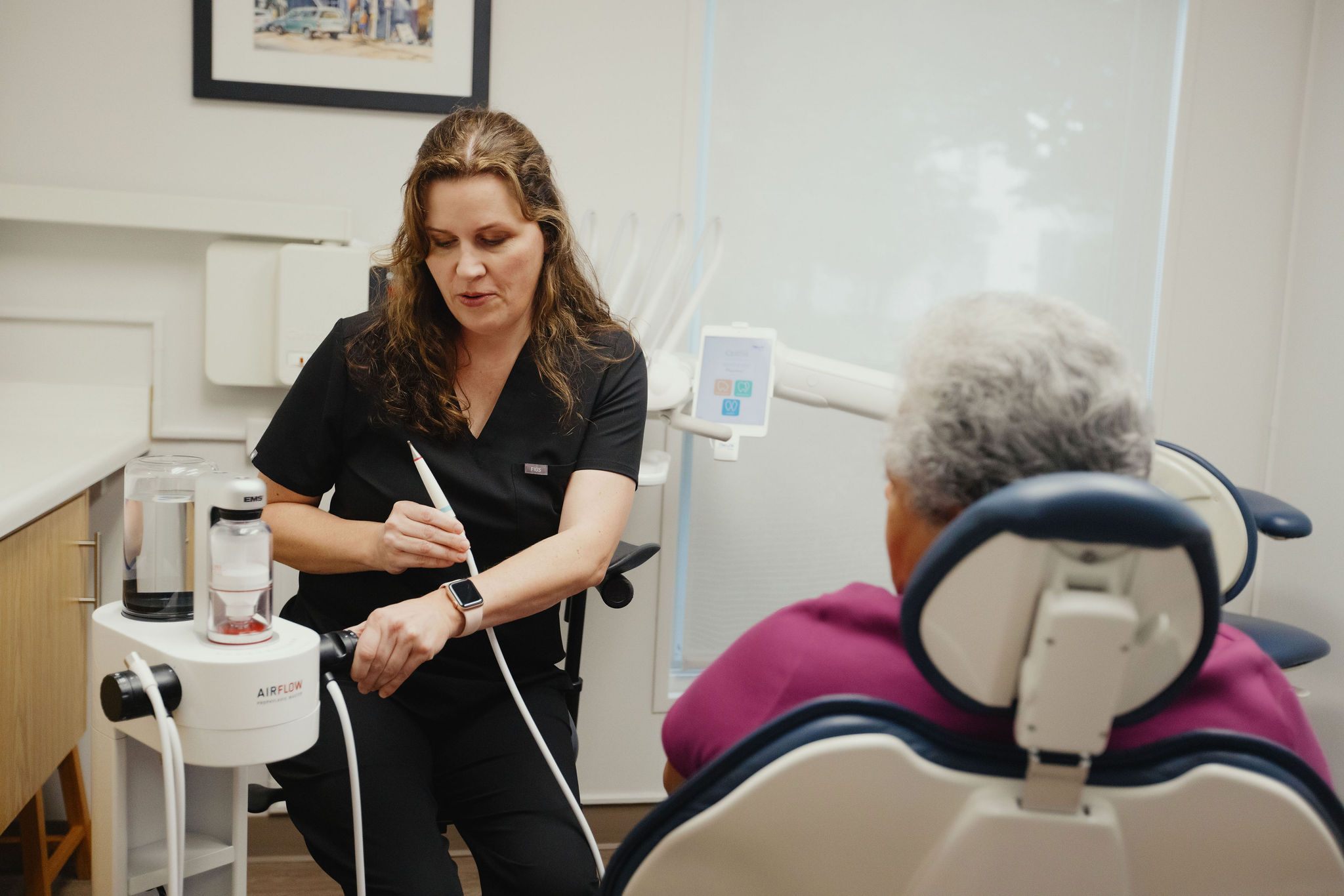
Healthy gums are the foundation of a healthy smile, and they matter far beyond your mouth. Periodontal (gum) disease is the leading cause of tooth loss in adults, and research links it to a higher risk of serious health issues including heart disease and stroke. It's also remarkably common: nearly half of Americans aged 30 and older, roughly 64 million people, have periodontitis, the advanced form of gum disease.
The good news? Caught early, gum disease is very treatable. At Sirin Dentistry in Elgin, we screen for gum disease at every checkup and offer a full range of periodontal treatments to stop it, reverse the damage, and protect your smile.
Warning Signs of Gum Disease
The tricky thing about gum disease is that its early stages can be invisible and painless. Many people have no idea anything is wrong until the disease has progressed. That said, watch for these common symptoms:
- Red or swollen gums
- Tender gums
- Bleeding when you brush or floss
- Receding gums (teeth looking longer than they used to)
- Persistent bad breath
- Loose teeth
- Toothaches
Bleeding gums are not normal, even if it's only a little pink in the sink. If you notice any of these signs, don't wait for them to get worse.
The Stages of Periodontal Disease
Stage 1: Gingivitis
Gingivitis is inflammation caused by bacterial plaque along the gumline. Gums may look red, swell, and bleed easily. Here's the crucial part: gingivitis is reversible. With professional treatment and improved home care, your gums can return to full health with no lasting damage. If you have any symptoms of gingivitis, we strongly encourage you to seek treatment as soon as possible, while the fix is still simple.
Stage 2: Periodontitis
Left untreated, gingivitis can progress to periodontitis. At this stage, the gums begin to pull away from the teeth, creating infected pockets below the gumline. Toxins from the bacteria, combined with your body's own inflammatory response, start to erode the bone and tissue that hold your teeth in place. Without treatment, the eventual result is loose teeth and tooth loss. Periodontitis can't be fully reversed, but it can be stopped and managed, and the earlier treatment begins, the more of your natural smile we can save.
How Do I Know If I Have Gum Disease?
You often can't tell on your own, and the symptoms above don't guarantee gum disease is present. The only way to know for certain is a periodontal evaluation. Our team will measure the pockets around your teeth, review your x-rays for bone loss, and assess your gum health, then explain exactly what we find and recommend the right treatment. Catching gum disease early is the single biggest factor in stopping it before it has a wider impact, so please bring any gum concerns to our attention, even ones that seem minor.
Periodontal Treatments We Offer
Treatment depends on how far the disease has progressed. Here are the periodontal procedures available through our Elgin office:
Scaling and Root Planing
The most common non-surgical treatment for gum disease, and often the only one needed when it's caught early. Using special dental instruments, we clean below the gumline where brushing and flossing can't reach, removing the bacteria and hardened tartar that have gathered along the tooth roots. The root surfaces are then smoothed so gums can reattach snugly. Think of it as a deep cleaning that resets your gum health.
Osseous Surgery (Pocket Reduction)
When pockets are too deep to clean non-surgically, osseous surgery provides direct access to the tooth roots to remove tartar and disease-causing bacteria. Reducing pocket depth limits bacterial spread, helps prevent further bone loss, and makes effective home care possible again. It can improve the appearance of your smile, too.
Guided Bone and Tissue Regeneration
Gum disease destroys tissue, but some of it can be rebuilt. In guided regeneration, barrier membranes are surgically positioned under the gums to direct the growth of healthy new tissue and bone, helping you regain a healthy gumline and a stronger foundation for your teeth.
Ridge Augmentation
Often performed after a tooth extraction, ridge augmentation rebuilds the natural contour of the gums and jaw. Restoring the height and width of the alveolar ridge (the bone that surrounds tooth roots) isn't always medically necessary, but it's frequently required for dental implant placement and can make a real aesthetic difference.
Sinus Lift (Sinus Augmentation)
When periodontal disease or long-term tooth loss has thinned the bone in the upper jaw, a sinus lift raises the sinus floor and adds bone between the jaw and the maxillary sinuses. This creates the solid foundation needed to properly place dental implants in the back of the upper jaw.
Frenectomy
The frenum is the small fold of tissue that connects your lower gums to your tongue, or your upper gums to your upper lip. An abnormally prominent frenum can pull on the gums and negatively affect teeth, gum tissue, and supporting bone. A frenectomy is a short procedure, typically about 15 minutes, that releases the frenum for a healthier long-term oral environment.
Protecting Your Gums Between Visits
Treatment stops gum disease; daily habits keep it from coming back. Brush twice a day, floss daily (it's the only thing cleaning between your teeth), and keep up with regular cleanings so we can remove tartar before it causes trouble. If you've had periodontitis, Dr. Sirin may recommend more frequent periodontal maintenance visits to keep bacteria in check.
Gum Disease FAQs
Can gum disease be cured?Gingivitis, yes, completely. Periodontitis can't be reversed, but it can be stopped and managed successfully for life with treatment and good maintenance. Either way, sooner is better.
Does scaling and root planing hurt?Your comfort comes first. The area is numbed before treatment, and most patients are surprised how easy it is. Some mild tenderness for a day or two afterward is normal.
Is gum disease really linked to heart disease?Research has shown associations between periodontal disease and several systemic conditions, including heart disease and stroke. Scientists are still studying exactly how they're connected, but healthy gums are unquestionably part of a healthy body.
I'm embarrassed that I've waited so long. Will I be judged?Never. We're here to help, not lecture. Whatever state your gums are in, the best day to start treatment is today, and you'll be met with kindness at our office.
Concerned About Your Gum Health? Let's Talk
If your gums bleed, feel tender, or just don't seem right, don't wait. Call Sirin Dentistry at (847) 742-1330 to schedule an evaluation. Our experienced team will quickly assess your gum health, answer your questions, and recommend the treatment that's right for you.
Connect with Us
We look forward to meeting you.
Call (847) 742-1330 or request an appointment online to set up your first visit. We’ll be in touch soon. To learn more, contact us today.

